
Selling a house involves more than choosing a price and signing a contract. Buyers, agents, lenders, attorneys and title professionals may all need documents that confirm who owns the property, what debts affect it and whether any unresolved issue could delay closing. The earlier you organize those records, the easier it becomes to compare selling options and answer important questions with confidence.
Why Seller Documents Matter Before You Accept an Offer
A missing document does not always prevent a sale. However, missing information can slow down a title search, delay a payoff request or create confusion about who has authority to sign. This can happen with a traditional listing, a direct cash offer or any other sale method.
A simple property folder gives everyone one dependable place to start. It also helps you identify issues that may require an attorney, lender, tax office, insurance company or other professional. You do not need to solve every problem before speaking with a buyer. You do need to disclose known issues and begin gathering the facts.
1. Ownership and Authority Documents
Begin with the most recent recorded deed. The deed shows how ownership is titled and which names the closing professional must review. If a name has changed because of marriage, divorce or another legal event, gather the records that explain the difference.
Authority documents become especially important when the property belongs to a trust, estate, business or person who cannot sign personally. A title company or attorney may ask for specific pages or certified copies rather than an entire private file.
- A copy of the most recent recorded deed or the deed recording reference.
- Government photo identification for each expected signer.
- Marriage, divorce, name-change or death records when owner names do not match.
- Trust, probate, business-entity, conservatorship or current power-of-attorney documents when applicable.
2. Mortgage, HELOC and Lien Information
Your monthly mortgage statement is useful for identifying the servicer and loan number, but it is not a final payoff quote. Interest, fees and other charges may change the amount required at closing. The closing professional normally requests a formal payoff that is valid through a specific date.
List every debt that may be connected to the property. That includes a first mortgage, home-equity line, second mortgage, solar or HVAC financing, judgments, tax liens, HOA balances and other recorded obligations. Do not assume a small or old balance has disappeared simply because collection letters stopped.
3. Property Tax and Insurance Records
Gather the latest Shelby County property tax information and City of Memphis tax records when the property is inside the city. Include receipts, payment-plan records and every delinquent notice. Taxes may be adjusted at closing, while delinquent amounts or an active court case can require additional work.
Keep the current homeowner insurance declarations page, flood information when applicable and records for recent claims. If insurance money paid for repairs, save the contractor invoice and proof that the work was completed. This helps explain the property’s history without relying on memory.
4. Occupancy, Lease and Utility Information
A vacant property has different risks from an owner-occupied home, and a tenant-occupied property requires accurate lease and deposit information. Write down who lives at the property, when possession can transfer and what written agreements apply.
- Current leases, amendments and tenant contact information.
- Security-deposit and prepaid-rent records.
- Written move-out, possession or occupancy agreements.
- Utility providers, account-transfer dates and access information.
- HOA rules, gate details, mailbox keys and property-management contacts.
5. Repair, Permit and Property-Condition Records
Repair records help a buyer understand what has been done and what may still need attention. Gather inspection reports, contractor estimates, paid invoices, transferable warranties and permits. Pay special attention to the roof, HVAC, electrical system, plumbing, foundation, sewer line, pest treatment and water damage.
If work was completed without a required permit or a code notice remains open, flag it for the closing professional. Hiding a known issue can create far more risk than addressing it early.
How to Share Documents Safely
Use a secure upload method when one is available. Ask which pages are actually needed and what information can be redacted. Never send bank passwords, login credentials, complete Social Security numbers or unnecessary account details through ordinary email.
Keep original signed and certified documents in a safe place. Share copies unless the closing professional specifically asks to inspect an original. Use consistent file names that include the date, document type and property shorthand so everyone can identify the latest version.
What If You Cannot Find Everything?
Start with the deed, owner identification, loan statements, tax notices and any document connected to a deadline. Then make a missing-document list. Write down who can provide each item, when you requested it and when you will follow up.
Replacement copies may be available from the county register, mortgage servicer, insurance agent, HOA, property manager or contractor who performed the work. Ask whether the closing professional can retrieve a public record directly. Record each request and save the response so a missing item does not become a last-minute surprise.
Do not wait for a perfect file before exploring your options. A clear summary of what you have, what is missing and what needs professional review can be extremely useful. The goal is not paperwork for its own sake. The goal is a smoother, more informed sale.
Get the Free Seller Resource
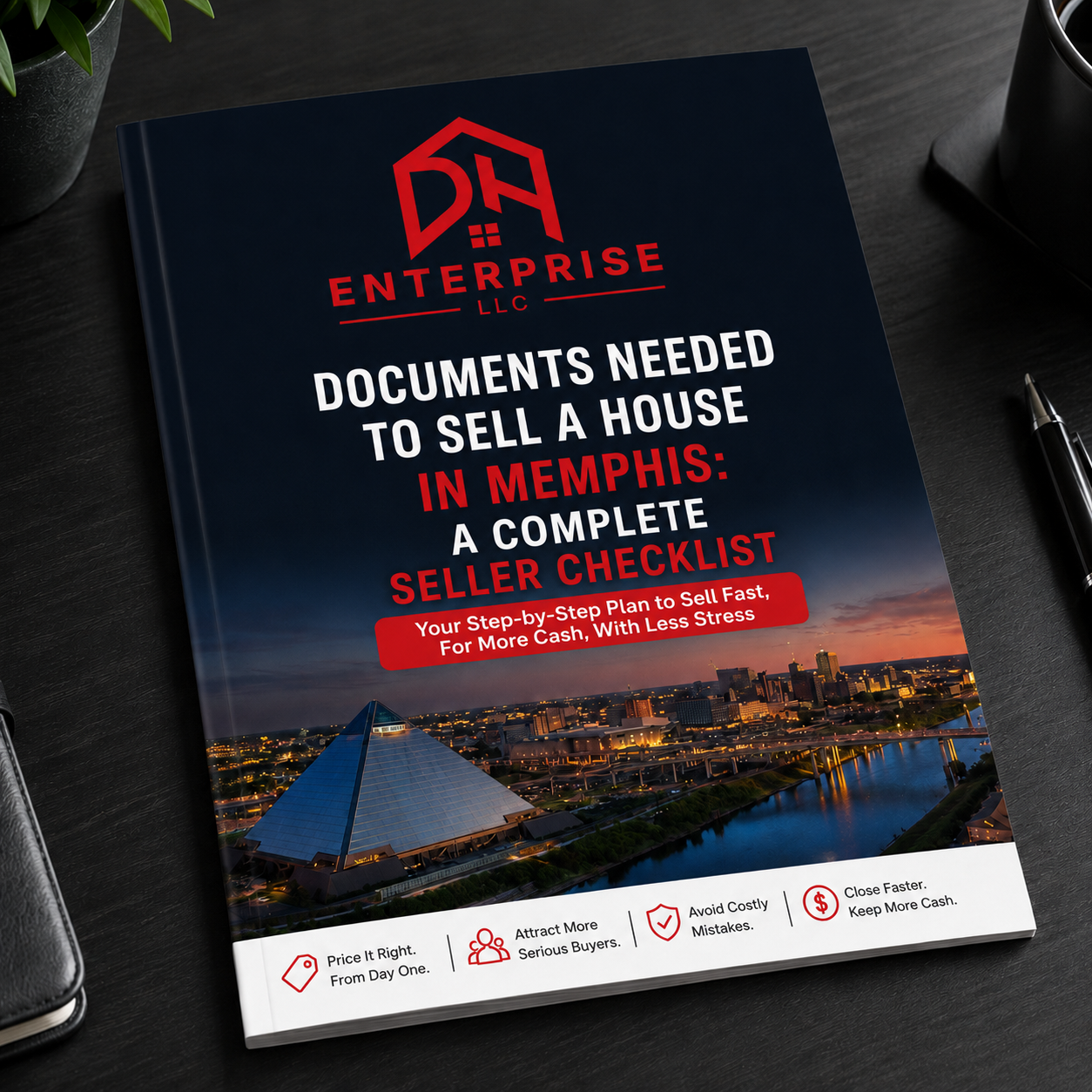
Documents To Gather Before You Sell
Use this printable checklist to organize deeds, loan statements, tax records, insurance documents, occupancy details and repair history in one place. Then contact DOH Enterprise LLC if you would like to discuss a possible direct-sale option for your Memphis property.
Call (901) 266-8884 | Email info@dohenterprisellc.com | Visit DOH Enterprise LLC
Office: 1028 Cresthaven Rd, Memphis, TN 38119, USA
Important: This article provides general educational information and is not legal, tax, title, insurance or financial advice. The documents required for a specific transaction may be different.



Join The Discussion